Clinical care
- Medical conditions
- Medications
- Behavioral health
- Clinical decisions
- Care transitions

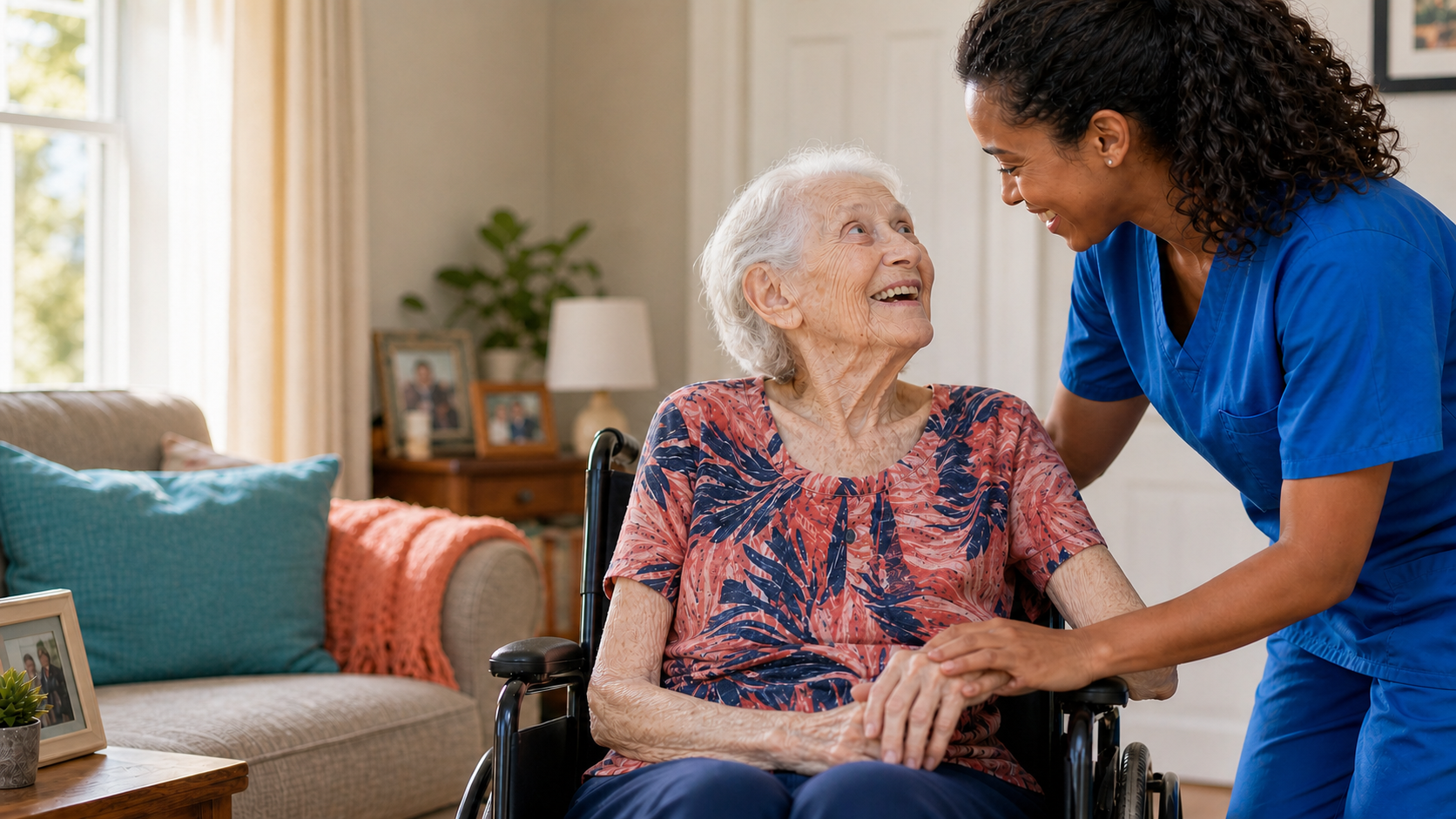
HarborWell provides physician-led, longitudinal clinical care for people with complex medical, functional, and social needs. Our teams stay connected between encounters—reaching out regularly, monitoring for meaningful change, and acting early to help patients remain healthy at home.
HarborWell serves people whose health and independence depend on medical care, long-term services and supports, family caregivers, and the realities of everyday life working together.
People who want to remain safely at home while managing frailty, chronic conditions, and changing functional needs.
People whose health and independence depend on medical care, personal assistance, equipment, and home- and community-based services working together.
Dual-eligible members managing multiple chronic conditions who need proactive, longitudinal clinical care.
People whose needs may span clinical, behavioral, functional, and community-based support over a lifetime.
HarborWell partners with HCBS organizations and the aides, families, and caregivers closest to the patient. Their day-to-day observations become part of the clinical picture—helping the team recognize change, reach out, and act early.
Our patients have clinical, functional, and social needs. The organizations that serve those needs operate in a fragmented market. They vary widely in size, capabilities, technology, and ability to share information. Each holds only part of the picture. But our patients' health and independence depend on all three working together.
HarborWell integrates this fragmented system around the patient. We bring clinical information, social context, and partner-delivered functional support into one longitudinal view—then coordinate action across organizations and remain accountable over time.
One view of the patient. Coordinated clinical action. Accountability over time.
The model is built for continuity and prevention: knowing the person over time, staying in regular contact, monitoring for meaningful change, and coordinating care before emerging needs become crises.
Physicians provide clinical leadership and accountability within an interdisciplinary team of nurse practitioners, registered nurses, pharmacists, registered dietitians, and licensed clinical social workers. Each discipline contributes to one longitudinal view of the patient and shares responsibility for coordinated action over time.
Patients and caregivers can rely on one clinical team that knows them—their history, goals, home, care plan, and the people who support them. The team stays engaged through proactive monitoring and outreach—recognizing meaningful change, reaching out early, and coordinating care before emerging needs become crises.
The relationship is active—not simply available on demand. HarborWell reaches out on regular clinical cadences and remains available between contacts. The team also monitors ADT, claims, clinical, and partner signals to identify changes that warrant outreach, assessment, or intervention.
HCBS organizations, frontline aides, and family caregivers extend the clinical team's visibility into daily life at home. Their observations become part of the patient's longitudinal clinical picture—helping HarborWell investigate concerns, recognize meaningful change, and intervene early.
Complex care is demanding. Clinicians should have a responsive organization around them—one that brings the right information forward, coordinates the work around decisions, and improves when the people doing the work see a better way.
Claims, clinical records, transitions, care plans, and member signals are organized into a longitudinal view and brought forward when they warrant attention—before the clinician has to ask.
Physicians, nurse practitioners, registered nurses, pharmacists, registered dietitians, and licensed clinical social workers share context and responsibility rather than leaving one clinician to carry the complexity alone.
HarborWell is evidence-based, data-informed, and experience-led. New ideas come from the clinicians and operators doing the work, from patients and caregivers, from clinical and operational data, and from external research. The people closest to the work help interpret those signals and translate them into better protocols, workflows, tools, and care.
HarborWell learns from the people doing the work, the patients we serve, and the outcomes we observe. What we learn becomes better protocols, workflows, tools, and care—creating a continuous cycle of learning and improvement.
HarborWell's platform brings together planned outreach, caregiver and HCBS observations, clinical records, ADT notifications, and claims data. It helps surface meaningful changes and emerging risks so the clinical team knows when to reach out and act.
AI helps synthesize information, identify gaps and emerging risks, prioritize attention, and reduce repetitive administrative work. It operates within defined context, tools, and controls—augmenting the judgment of the clinical team rather than replacing it.
A signal may surface during regular outreach, through a caregiver or frontline aide, from an ADT notification, or within clinical and claims data. HarborWell brings those signals into context so the clinical team can reach out, assess, and act early.
Planned outreach, caregivers, HCBS partners, and connected data provide an ongoing view of the patient.
A new symptom, functional change, care transition, missed service, or emerging utilization pattern is brought to the team's attention.
Deep EMR integration and connected data bring together relevant history, medications, claims, recent transitions, care-plan context, and prior member signals.
The clinician receives a cohesive view without having to hunt across systems.
The platform prioritizes attention and provides context. The clinician applies judgment and determines the appropriate response.
Follow-up is assigned, the right participants are informed, and the concern remains visible until it is resolved.
The team follows through, stays in touch, and carries what it learns into the member's ongoing care. Each interaction deepens the understanding already in place.
When care works, patients thrive at home.